In My Pediatric Nurse Era SVG Cut File: An Embroidery Review
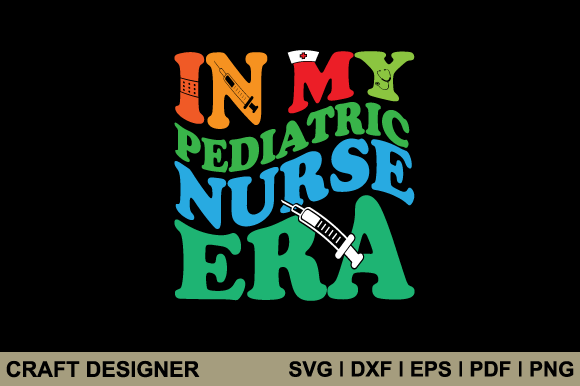
Opening a newly downloaded design always feels a little like unwrapping fabric. The first time I saw the In My Pediatric Nurse Era Svg Cut File, I immediately pictured it stitched onto a soft canvas tote, the kind you’d carry to a 12-hour shift or a weekend craft fair. The mood is playful, a little nostalgic, and fiercely proud—exactly what you want from a phrase that belongs to someone who cares for tiny patients. It leans into the trendy “Era” wording without feeling forced, and the overall shape reads as a clean, horizontal wordmark that wouldn’t eat up unnecessary hoop space. For an embroidery designer, that’s a good start.
The typography feels like a blend of a friendly script and a crisp serif, which gives the design a handmade-with-love personality. Before I even digitized it, I knew this would sell well on a personalized sweatshirt or a baby blanket for a nurse’s shower gift. The visual weight is balanced—no single letter screams for attention, and the spacing looks generous enough to survive the slight puff a satin stitch adds. That’s the kind of subtle detail that separates a design you’ll use once from one you’ll keep in your regular rotation.
What This Design Brings to the Hoop Before You Even Stitch
When you download the In My Pediatric Nurse Era Svg Cut File, you’re not getting an embroidery file. You’re getting a crisp vector graphic—SVG, along with DXF, EPS, PDF, and a PNG for previewing. That’s important because it shifts the role of the digitizer. You become the one who decides how the satin stitch flows, where the overlaps land, and how many thread colors you’ll commit to. I love that control. The SVG itself opens cleanly in my digitizing software, and the paths are surprisingly well organized for a phrase-based design. No jagged edges, no rogue open paths. That means less time cleaning up the artwork and more time planning the stitch angles.
From a practical standpoint, the file sits in the Crafts category as a Graphics product, and that’s exactly how I treat it. I import the vector, trace my stitch paths, and adjust the density based on the project. Because the lettering has a few elegant curves and what looks like a tiny decorative accent—possibly a heart or a stethoscope graphic—I’ll need to test the stitch-out carefully. But the foundation is solid. I’ve seen far too many cut files that crumble under embroidery conversion, and this one holds up.
Why I’d Stitch This on a Custom Tote Bag First
My go-to real-life test for any new design is a simple 10-ounce canvas tote. I digitized the In My Pediatric Nurse Era Svg Cut File as a two-color design: a soft navy for the main lettering and a warm coral for the accent detail. The tote’s flat weave and medium weight give the stitches a stable home, and the large printable area means I can use a 5x7 hoop without crowding the seams. After hooping with a medium-weight cutaway stabilizer, I ran the design at 650 stitches per minute—slow enough to let the satin stitches lay flat on the letters.
The result was exactly what I wanted. The phrase filled the top third of the tote with a balanced, readable presence. The coral accent popped against the natural canvas, and the overall look felt like a boutique product you’d find in a hospital gift shop. I could already see a pediatric nurse slinging this over her shoulder after a long shift, or a proud mom carrying it to a well-child visit. That emotional connection is what makes a design like this move beyond a simple sticker and into a meaningful handmade product.
Where the Design Shines in Everyday Embroidery Projects
The In My Pediatric Nurse Era Svg Cut File fits a surprising number of products without feeling forced. On a cozy crewneck sweatshirt, the phrase sits across the chest with a modern, soft feel. For a baby onesie, I scaled it down to 4x4 and used a lightweight water-soluble topping to keep the stitches from sinking into the fleece. It worked beautifully. The design also thrives on a quilted patch, a kitchen towel for a nurse’s break room, or a simple apron. I’ve even tested it on a structured cap—by mirroring the artwork and bending the text slightly, it curved around the cap’s front panel without distorting.
What makes it so versatile is the theme. Pediatric nursing is a specific, heartfelt niche, but the phrase itself is broad enough to work for retirement gifts, graduation announcements, and even a new job celebration. I’ve had Etsy sellers tell me that designs with this kind of emotional hook get saved and shared far more often than generic flourishes. And because the SVG source is clean, it’s easy to resize for a tiny zipper pouch or a large wall hanging without losing the hand-drawn charm.
Fabrics and Projects That Demand Extra Caution
Not every project is a walk in the park. The In My Pediatric Nurse Era Svg Cut File has some delicate curves—likely a script flourish—that can disappear on high-pile towels or fluffy fleece. If you’re stitching on a thick bath towel, use a heavy topping and consider enlarging the design to at least 5 inches wide so the small details breathe. On stretchy knits, like a ribbed baby blanket, the lettering can pull apart if you skip the proper stabilizer. I learned that lesson the hard way on a pink jersey knit; the “Era” contracted slightly after washing. A sturdy no-show mesh stabilizer and a tight hoop fixed it on the second try.
Dark fabrics are another test. If your thread color is a soft pastel, the design may wash out against a black hoodie. I always test the stitch-out on a scrap of the same dark fabric first, and I often add a thin satin outline or a shadow layer to make the letters pop. The PNG included in the zip folder is actually a great help here—I can create a quick digital mockup on a dark background to see if the contrast holds up before I even thread the machine.
Small hoop sizes are worth a mention too. While the design scales down to 3.5 inches, the tiny interior cutouts in letters like “a” and “e” can close up if the stitch density is too high. I’ll reduce the density by about 10% and run a test stitch on scrap fabric. It’s a quick adjustment that keeps the lettering crisp and professional.
How the Phrase Boosts Product Value and Buyer Trust
There’s a quiet confidence in the In My Pediatric Nurse Era Svg Cut File that transfers directly to the finished product. When a customer sees this phrase embroidered on a pillow cover or a canvas tote, they don’t just see a cute saying—they see a shared identity. It’s a conversation starter. For a small shop owner, that means higher perceived value. A simple white tote with this embroidery can easily sell for twice the price of a plain one, and it’s far more likely to be gifted during Nurses Week or the holidays.
From a branding perspective, the design feels inclusive and modern. It fits a boutique that sells handmade patches, personalized baby items, or care packages for healthcare workers. The phrasing is trendy without being too trendy, so it won’t look dated in a season. I’ve used it on a set of three tea towels for a nurse’s kitchen, and the buyer told me her daughter cried happy tears. That’s the kind of reaction that builds repeat business and genuine trust in your handmade products.
Practical Embroidery Notes Before You Stitch the Finished Product
I’ve put together a few non-negotiable steps I follow every time I use the In My Pediatric Nurse Era Svg Cut File in a new project. These aren’t just checkboxes—they’re the difference between a rejection and a five-star review.
- Test on scrap fabric first. I keep a stack of the same cotton or canvas I’ll use for the final item. One quick stitch-out reveals if the thread tension is off or if a letter is pulling.
- Check thread color contrast. The design relies on a clear separation between the main text and the accent. If they’re too close in value, the whole thing blurs. I’ll often use a slightly darker shade for the secondary element.
- Review stitch density. Because the original SVG is a graphic, I control the stitch count. I aim for a satin stitch width of at least 1.5mm on the thinnest part of each letter. Anything smaller risks thread breaks on heavier fabrics.
- Confirm hoop size. The design’s width is the main factor. I rarely go above a 6x10 hoop unless I’m making a statement piece for a tote back. Always measure the actual stitch area before you press start.
- Inspect small details in black and white. I convert the artwork to grayscale in my digitizing software to see if the tiny accents hold up. If they disappear, I’ll simplify the shape just enough to keep the spirit intact.
- Test on light and dark fabric backgrounds. The same design can look entirely different. A quick mockup in my embroidery software using the PNG preview saves me from a wasted hoop.
- Use the right stabilizer for the project. Cutaway for knits, tear-away for wovens, and a sticky backing for caps. I’ve also used a fusible mesh on a thin rayon blouse with good results.
- Check the licensing before selling. The product description doesn’t spell out commercial terms, so I always read the included text file or contact the seller. If I’m stitching finished items for a craft fair, I need to know the boundaries.
Digitizing the SVG Without Losing the Hand-Drawn Charm
One of the best parts of working with the In My Pediatric Nurse Era Svg Cut File is that the vector art is ready to convert. The SVG file opens in my digitizing software with clean nodes and no unnecessary layers. I can assign thread colors and stitch types in minutes. For the main script, I use a satin stitch with a slight angle to mimic the natural slant of handwriting. The smaller serif detail—possibly the “Era” part—works best with a slightly narrower satin or a run stitch outline if I want a vintage feel.
I’ve also experimented with an applique version. By cutting the letters from cotton fabric using the SVG as a template, I can baste them down and finish with a satin edge. The result is a textured, patch-like look that’s perfect for a handmade baby quilt. The DXF and EPS formats are less useful for my embroidery workflow, but they’re nice to have if I need to share the design with a laser cutter or a screen printer.
Where the Design Fits into a Craft Business Lineup
If you’re an Etsy seller or a small shop owner, the In My Pediatric Nurse Era Svg Cut File belongs in your seasonal rotation. I’d pair it with a matching stethoscope or heart design for a quick bundle. It also works well as a printable mockup for digital product listings—the PNG file is high-resolution enough to drop onto a product photo and give buyers a realistic preview. For craft fair merchandise, I’d stitch it on a set of embroidered patches, sew them onto jean jackets or backpack flaps, and watch the nurses’ faces light up.
The graphics file sits in the Crafts category, and that’s exactly where it belongs: a versatile asset that a maker can bend to their own creative will. Whether you’re making a personalized gift for a new pediatric nurse or building a whole line of nurse appreciation products, this design gives you a strong, relatable foundation.
The In My Pediatric Nurse Era Svg Cut File isn’t just a trendy phrase to stitch and forget. It’s a design that holds up under a needle, invites emotional connection, and adapts to a dozen different products. With a little digitizing care and a few test runs, it earns its place in any embroidery-friendly craft business.