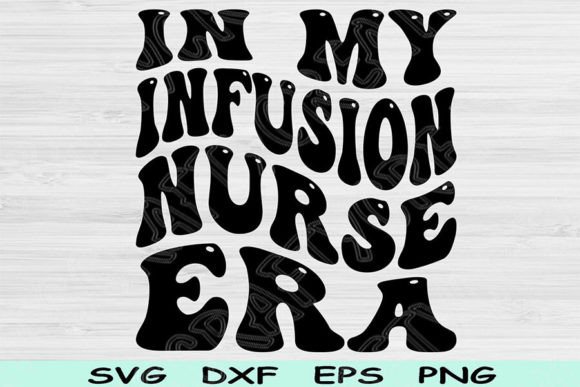
In My Infusion Nurse Era Svg Cut File
When a new design lands on my desk, I don't just glance at the preview. I picture it finished, stitched onto a real product, maybe a soft unisex sweatshirt, maybe a structured tote bag, and I ask myself: Who is this for, and will it hold up under real embroidery scrutiny? That's exactly what I did with the In My Infusion Nurse Era Svg Cut File. It's a text-based graphic built around the phrase "in my infusion nurse era," and that simple statement carries a lot of personality. For anyone in the medical field, especially infusion nurses, this design is a quiet badge of pride. From a digitizing and embroidery perspective, it's a clean, focused piece that can translate beautifully onto fabric, but only if you respect its typographic nature and plan your stitch-out carefully.
First Impressions and the Mood It Creates
The design reads like a humble, self-aware wink. It's not loud or clinical. The lettering style, likely a script or a modern serif that leans slightly playful, gives it a soft, personal feel. I immediately pictured this on a heather gray crewneck with the words stitched in navy or a muted teal, something that feels comforting but professional. The phrase "in my era" borrowed from the pop culture trend, makes it instantly recognizable and emotionally resonant for a specific audience. That's the kind of design that sells well in a handmade shop, not because it's trendy, but because it connects.
As a reviewer who has seen thousands of embroidery designs, I appreciate when a file forces me to slow down and think about its best use rather than its limitations. The In My Infusion Nurse Era Svg Cut File isn't overly complex. It's a typographic statement. That means its success in embroidery depends entirely on how you handle the conversion to a stitch file, the thread choices, and the product surface you pair it with.
Real-Life Scenario: A Custom Sweatshirt for a Hardworking Nurse
Let's walk through a practical project. I recently prepared a gift for a friend who works in an infusion clinic. She's been through a tough year, and I wanted something that felt both personal and wearable to work. I started with this SVG file, knowing it was a digital artwork file that could be imported into my digitizing software. I resized it to fit the left chest area of a unisex pullover—about 4 inches wide. I tested the digitized version on a scrap of the same French terry fabric, using a medium-weight cutaway stabilizer and a 40-weight polyester thread. The goal was to preserve the delicate letter connections without making the satin stitch too dense.
The result, after two test runs, was exactly what I'd hoped: a crisp, legible stitch-out that felt like part of the garment, not a heavy patch slapped on. The phrase "in my infusion nurse era" read clearly, and the soft curves of the lettering looked intentional. On a shirt, it would be a conversation starter, and for a handmade gift, it carried a personal touch that no generic store-bought item could match.
Where This Design Shines in Embroidery
The strength of the In My Infusion Nurse Era Svg Cut File lies in its versatility for simple, high-impact projects. Here are a few product ideas where it truly makes sense:
- Custom apparel: sweatshirts, t-shirts, long-sleeve tees, and hoodies. The left chest or a small center back placement works best.
- Tote bags: a canvas tote with this design stitched in a single color becomes a thoughtful utility item for a nurse to carry supplies.
- Embroidered patches: digitize it as a patch with a merrowed edge, and you have a sew-on or iron-on accessory for a work jacket or a scrub cap.
- Pillow covers: a subtle accent for a home office chair or a reading nook, especially in a monogram style.
- Aprons: a linen apron with this phrase near the pocket adds a bit of personality for a nurse who cooks or crafts at home.
- Tea towels: a sweet, small embroidery on a flour sack towel makes a charming gift for a nurse's kitchen.
In each case, the design's simplicity allows it to blend into the product without overwhelming it. The customer's eye goes straight to the message, and that's exactly what you want for a personalized gift or a boutique product.
Stitching Considerations and Where to Use Caution
Typography-based designs are deceptively simple. They require precise digitizing and careful fabric handling. Here's what I recommend watching out for when you work with the In My Infusion Nurse Era Svg Cut File on real embroidery projects.
- Small hoop sizes: If you shrink the design too much, especially below 3 inches wide, the counters of letters like "e" and "a" can close up under dense satin stitches. Always test the smallest size you plan to use.
- Textured fabrics: Terry cloth, waffle knit, or heavily napped fabrics can distort letter edges. Use a water-soluble topping to keep the stitches sitting on top of the texture.
- Stretchy fabrics: On performance wear or thin jersey, minor fabric movement can cause misregistration. A firm stabilizer and basting box are non-negotiable.
- Dark fabrics: The design's impact relies on clean contrast. If you stitch with a light thread on a dark background, any tiny gaps in the satin stitch will show the fabric underneath. Consider a slightly wider column width or a darker thread color to maintain visual solidity.
- Curved surfaces like caps: The straight baseline of the text might need to be adjusted into a slight arc to fit the front panel of a cap naturally. Digitizing software can help curve the text while keeping the letterforms intact.
- Frequent washing: Products like scrub tops or everyday tote bags will face repeated laundering. I always recommend polyester thread over rayon for better colorfastness, and a soft backing to prevent skin irritation.
How the Design Affects Visual Appeal and Customer Trust
When you sell a finished product with this design, you're selling more than a shirt. You're selling identity and appreciation. The phrase "in my infusion nurse era" is specific, and that specificity attracts a loyal customer who feels seen. From a brand perspective, offering well-stitched, tasteful embroidery using this design tells your customers that you understand their world. It builds trust because the product doesn't feel generic.
In my experience, buyers on Etsy or at craft fairs will pick up a tote or a sweatshirt, read the embroidery, and smile. That emotional connection is what turns a browser into a buyer. The design's visual clarity after stitching, the thread sheen, the evenness of the lettering, it all contributes to a perception of quality. A poorly digitized version, with uneven satin stitches or wobbly letters, does the opposite. It cheapens the message. So, the In My Infusion Nurse Era Svg Cut File demands that you, as the maker, take the time to digitize properly and test thoroughly. The design itself is a great starting point, but the final product's value rests on your execution.
Practical Designer Notes Before You Start
I always keep a checklist for any new design file I evaluate, especially something that starts as an SVG and needs to be converted for machine embroidery. Here's what I'd recommend for this one:
- Test on scrap fabric first: Use the same fabric type and stabilizer you'll use for the final product. Check for puckering, thread breaks, and letter clarity.
- Check thread color contrast: Hold the thread against the fabric in daylight and under indoor lighting. The design's mood changes dramatically with color choice—a soft pastel feels gentle, while a bold color makes it pop.
- Review stitch density: In your digitizing software, look at the stitch count. If the satin stitches are too dense, you'll get a stiff, heavy result. Too light, and the fabric shows through. Adjust the underlay and pull compensation.
- Confirm hoop size: Measure the design at its intended size and verify it fits comfortably within your hoop, leaving at least half an inch of clearance on all sides for the hoop's inner boundary.
- Inspect small details: Zoom in on the "i" dots, the cross of the "t", and the connection points of script letters. Any tiny break can cause a thread trim or a messy jump stitch.
- Test in black and white mockup: Convert the design to a grayscale image and print it. If the lettering still reads well without color, it'll stitch well. If it looks muddy, consider simplifying the font or increasing the letter spacing.
- Compare light and dark fabric backgrounds: The same design can look entirely different on a white tee versus a navy sweatshirt. I often run two test stitch-outs, one on each extreme, to see if any adjustments are needed.
- Use proper stabilizer: A cutaway stabilizer is safest for garments that will be worn and washed. For tote bags, a tear-away might suffice, but I prefer a no-show mesh to keep the back clean.
- Check licensing and usage rights: Since this is a digital artwork file, confirm whether the seller allows commercial use of finished embroidery products. The product description says these are digital files, but it doesn't specify the full license terms. Always reach out to the designer or read the full listing details before selling finished items, especially if you plan to offer them on Etsy or in a boutique.
Where This Design Fits in a Craft Business
For a small business owner, the In My Infusion Nurse Era Svg Cut File can fill a nice niche. Nurse appreciation gifts are always in demand, and the infusion nursing specialty is less common than general RN designs, which means less competition. You can create a small collection around it: a matching sweatshirt and tote set, or a trio of designs for different nursing roles. The key is to present the finished product with thoughtful photography, showing the embroidery on a person or styled flat lay, so customers can see the scale and the thread texture.
If you sell digital embroidery files, this design, after digitizing, could be a valuable addition to your shop. Just be transparent about the original SVG source and ensure you have the appropriate commercial license to resell the digitized file. Many crafters search for "infusion nurse embroidery design" and a clean, well-digitized version of this phrase would stand out.
Final Thoughts on Real-World Embroidery Use
After spending time with this design, I come away feeling that it's a thoughtful, marketable piece. The In My Infusion Nurse Era Svg Cut File isn't trying to be overly decorative or complicated, and that's its strength. It leans into a meaningful phrase and trusts the maker to handle the stitch-out with care. For an experienced embroidery designer, it's a canvas that you can elevate with proper digitizing, thread selection, and product pairing. For a new maker, it's a forgiving design if you start with a larger size and a stable fabric.
I would confidently use it on a client order for a nurse's week gift, a personal thank-you item, or a small batch of boutique products. As long as you test thoroughly, mind the small details, and respect the lettering, this design will reward you with a finished product that feels personal, professional, and perfectly suited to the person who wears it.