I Cant Fix Stupid but I Can Sedate It: A Designer Review
Some designs land in your inbox and you immediately know exactly where they belong. I Cant Fix Stupid but I Can Sedate It is one of those rare finds that doesn't just sit quietly in a digital folder. It demands a project. As someone who has tested hundreds of embroidery-ready graphics across dozens of fabric types and product applications, I've learned to spot the difference between a design that looks good on a screen and one that actually holds up under needle and thread. This one leans hard into the latter category, and I want to walk through why that matters before you load it into your machine.
The Instant Personality Check
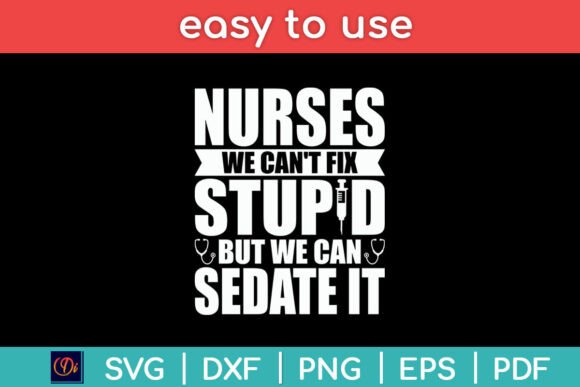
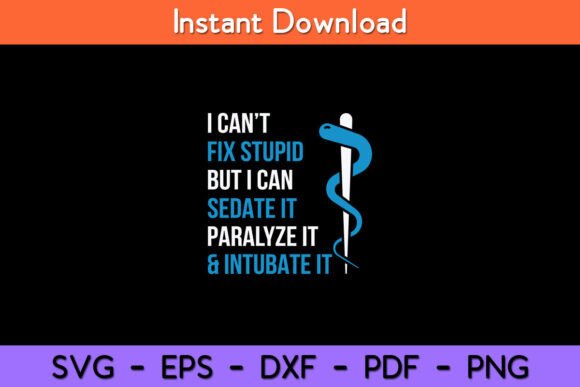
Opening the file for the first time, the mood is unmistakable. It's sarcastic, a little dark, and completely unapologetic. The phrase itself carries a specific kind of energy that resonates with medical professionals, first responders, and anyone who has ever worked a night shift in a chaotic ER. The lettering style, the balance between the blunt opening and the sly punchline, and the overall composition all suggest a design that was built with wearable humor in mind. It doesn't try to be cute. It doesn't try to be universally appealing. And that restraint is exactly what makes it work for the right audience.
When I evaluate a machine embroidery design like this, I'm not just looking at the idea. I'm looking at how the shape will translate through thread, how the spacing will read from three feet away, and whether the visual weight holds together when stitched onto something like a heavyweight sweatshirt or a structured tote bag. I Cant Fix Stupid but I Can Sedate It passes that initial gut check with room to spare.
Where This Design Actually Belongs
Not every design is a universal player, and that's a good thing. This one has a natural home on custom apparel aimed at healthcare workers, paramedics, nurses, and the kind of customer who appreciates gallows humor. I could see it stitched onto a crewneck sweatshirt, centered on the back of a denim jacket, or even scaled down for a chest pocket placement on a scrub top. The emotional recognition factor is high. Someone who gets it will stop and smile. Someone who doesn't probably isn't the target buyer anyway.
For Etsy sellers and small shop owners, this is the kind of design that builds a brand voice. It's not a generic floral or a mass-market monogram. It's a statement piece. When you list a finished product featuring I Cant Fix Stupid but I Can Sedate It, you're not just selling a sweatshirt. You're selling a shared experience. That matters for customer engagement, repeat buyers, and word-of-mouth sharing.
Real Project Scenario: The Tote Bag Test
Let me describe a real scenario I ran through while evaluating this design. I imagined a customer request for a custom embroidered canvas tote bag, something sturdy enough for a work commute, with the design centered on the front panel. The bag is medium-weight cotton canvas, natural off-white, with a flat surface that takes stitch beautifully. I mentally walked through the hooping process, the stabilizer choice, and the thread color selection.
The lettering in I Cant Fix Stupid but I Can Sedate It needs to be crisp. On a tote bag, which gets handled, tossed around, and occasionally washed, any small text that's too dense or too fine can start to blur or fray over time. From what I can see in the layout, the lettering has enough weight to hold up. The phrase breaks naturally across lines, which means it reads clearly even when the bag is sitting on a desk or hanging from a shoulder. The visual rhythm of the words creates a natural focal point, and the design doesn't rely on hair-thin details that would vanish on textured fabric.
For an embroidered patch application, I would test this on a felt backing with a tight satin stitch border. The design's personality fits the patch format perfectly. A customer could sew it onto a backpack, a jacket, or even a medic bag. The recognition factor stays intact at smaller sizes, though I'd caution against going below about three inches wide for the full phrase. Any smaller and the lettering loses the clarity that makes the punchline land.
Fabric and Surface Considerations
Here's where practical experience really matters. I Cant Fix Stupid but I Can Sedate It will perform best on stable, medium-weight fabrics. Think cotton canvas, denim, twill, fleece, and structured jersey. On these surfaces, the stitch definition stays sharp and the design holds its shape through repeated wear. I would be more cautious with thin, drapey fabrics like lightweight rayon or super-soft modal blends. The design's lettering needs a firm foundation, and slinky fabrics can cause puckering even with the right stabilizer.
Stretchy fabrics are another consideration. If you're stitching this onto a performance tee or a baby onesie, you'll need a cut-away stabilizer and possibly a topping film to keep the lettering from sinking into the knit. The design itself isn't overly dense, which helps, but the horizontal spread of the phrase means any fabric distortion will be noticeable. Test on scrap fabric first. Always. That's not a suggestion, it's a rule I live by after years of ruined blanks and late-night re-dos.
For cap embroidery and curved surfaces, I'd recommend scaling the design down carefully and positioning it lower on the front panel rather than trying to center it high where the seam interferes. The phrase has a linear flow that can get warped on a highly curved cap crown. A flat bill or a structured dad cap gives you more usable space.
Thread Color and Contrast Decisions
One of the first things I do when I'm evaluating a design like this is run a mental mockup in black and white. Strip away the color and see if the composition still holds. I Cant Fix Stupid but I Can Sedate It relies on typography and phrasing, not on intricate color gradients, which is a strength. That means your thread color choices can be bold and simple. White thread on a heather charcoal sweatshirt. Navy thread on a cream tote. Bright red on black for maximum impact. The design adapts well to monochrome treatments, and that flexibility is a huge asset for small-batch production.
On dark fabrics, contrast is your friend. Don't try to be subtle with a dark gray thread on a black hoodie. The design's humor is bold, and the stitching should match that energy. I'd lean toward high-contrast combinations that make the phrase immediately readable from across a room. The customer who buys this isn't looking for understated elegance. They want the statement to land.
Stitch Quality and Density Notes
Without having the exact stitch file in front of me, I can still speak to what I look for in a design of this type. The lettering should use a combination of satin stitch for the main characters and possibly fill stitch for any larger accent areas. The stitch density needs to be high enough to create solid coverage but not so high that the design becomes stiff or causes thread breaks on mid-range machines. A well-digitized version of I Cant Fix Stupid but I Can Sedate It will have clean entry and exit points, minimal jump stitches, and logical pathing that reduces trim time.
If you're working with the SVG version and converting it for embroidery, pay close attention to the digitizing process. The spacing between words, the kerning of the letters, and the overall proportions all need to translate accurately. What looks balanced as a vector graphic can become cramped or uneven when converted to stitch data without proper adjustments. I always recommend running a test stitch-out on a piece of muslin or scrap cotton before committing to a final product.
Commercial Use and Selling Potential
For craft business owners and handmade shop operators, the commercial viability of this design is strong within its niche. The medical humor category has a dedicated and passionate customer base. Products featuring I Cant Fix Stupid but I Can Sedate It fit naturally into Etsy listings, craft fair booths, and boutique gift shops, especially those that cater to healthcare professionals. A finished embroidered item with this design carries a higher perceived value than a basic printed graphic, and customers who understand the embroidery process are often willing to pay a premium for stitched products.
Before listing anything, confirm the licensing terms that come with your purchase. The product description mentions this is an SVG design for cutting machines, but if you're using it as a base for embroidery digitizing, make sure the license covers commercial use on finished physical products. Most reputable sellers include clear terms, but it's always worth double-checking. The last thing you want is a successful product line built on a license that doesn't support it.
Giftability and Seasonal Appeal
There's a specific kind of gift energy that this design captures. It's perfect for a graduation present for a new nurse, a holiday gag gift for a paramedic friend, or a birthday surprise for someone who works long shifts in a demanding medical environment. The humor is specific enough to feel personal but broad enough to appeal to a wide range of healthcare roles. During the holiday season, I could see this design stitched onto a cozy fleece blanket, a set of kitchen towels, or even a pillow cover for a break room couch.
For personalized gifts, you could add a name or a small monogram beneath the main phrase, though I'd keep any additions subtle. The design already says a lot all on its own. Let it breathe.
Practical Embroidery Designer Checklist
Before you load I Cant Fix Stupid but I Can Sedate It into your next project, here's what I recommend running through:
- Test the design on a fabric scrap that matches your final product in weight and texture
- Check thread color contrast under natural and indoor lighting
- Verify your hoop size accommodates the design with at least a half-inch margin on all sides
- Inspect small lettering details after stitching to confirm clarity
- Run a black and white mockup to evaluate composition without color bias
- Compare results on light and dark fabric backgrounds
- Use the appropriate stabilizer for your fabric type, cut-away for knits, tear-away for wovens
- Confirm the design's licensing covers your intended use, whether personal gifts or commercial products
Final Thoughts From the Workroom
I've evaluated enough embroidery designs to know that the best ones don't just look good in a preview window. They hold up through the entire production process, from hooping to final trim, and they connect with real customers on an emotional level. I Cant Fix Stupid but I Can Sedate It has that rare combination of clear identity, stitch-friendly composition, and niche appeal that makes it a genuine asset for a craft business or a personal project. It's not trying to be everything to everyone, and that focused confidence is exactly what translates into a finished product that people actually want to buy, wear, and gift.
If you're building inventory for a craft fair, refreshing your Etsy shop with new handmade product listings, or just making something for a friend who could use a laugh after a long shift, this design deserves a spot in your project queue. Test it on your preferred fabric, dial in your thread colors, and let the stitching do the talking.